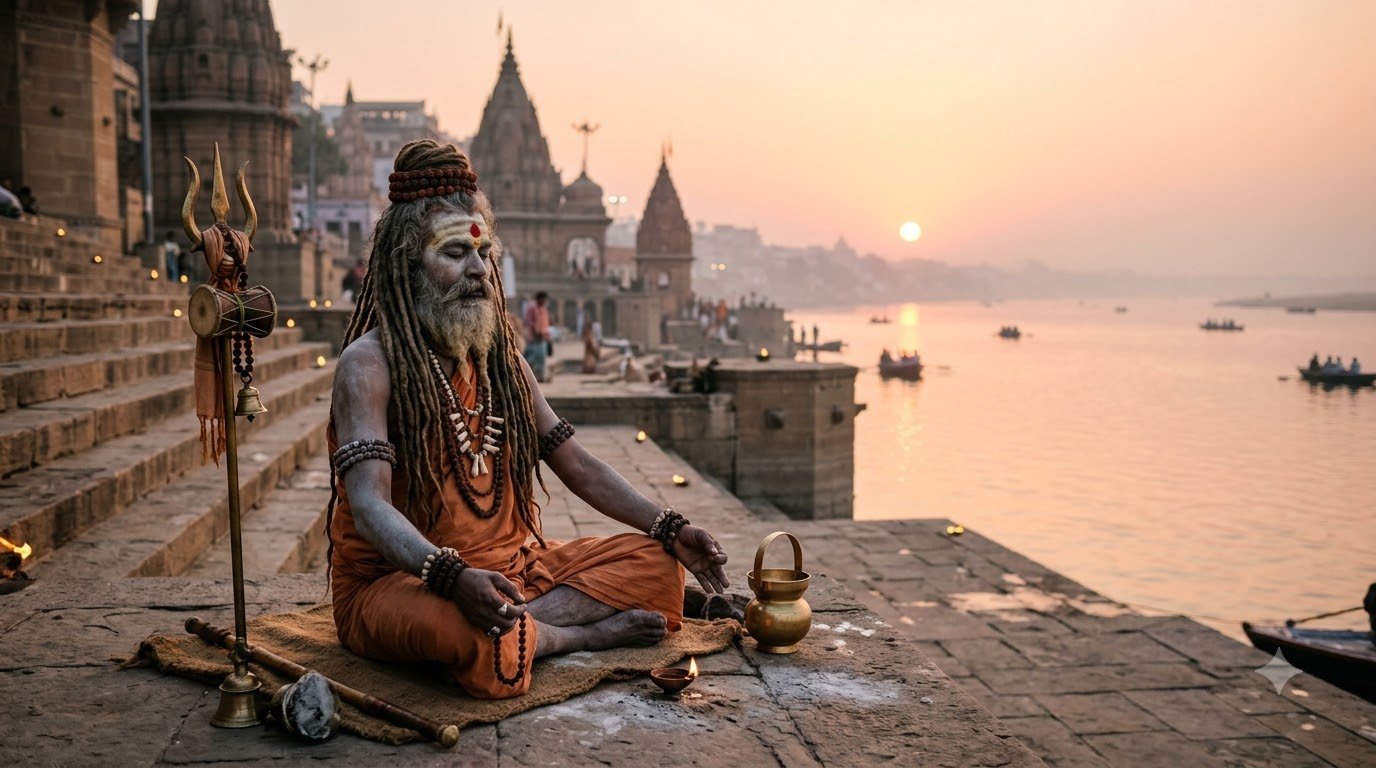
Yogi Rudra Aghori Aghori Information The word “Aghori” often creates curiosity mixed with mystery. Many people search for information about Aghoris because of their unique place in India’s spiritual landscape. Some also look for connections with names like Yogi Rudra in relation to this path. This article offers a clear, respectful, and informative overview of the Aghori tradition. It explains the meaning, history, core beliefs, and common understandings without sensationalism.
The goal is to provide useful knowledge in simple English so readers can understand this ancient stream of Shaivite spirituality. For those seeking personal spiritual guidance related to traditional paths, the official contact details linked to yogirudramaharaj.info are shared at relevant points. Yogi Rudra Aghori Aghori Information
What Does Aghori Mean?
The term Aghori comes from the Sanskrit word “Aghora.” It means “not dreadful,” “fearless,” or “beyond darkness.” In spiritual language, it points to a state of consciousness free from fear, disgust, hatred, and dualistic thinking. Yogi Rudra Aghori Aghori Information
Aghoris are ascetic practitioners within the broader Shaiva tradition of Hinduism. They are devotees of Lord Shiva, especially in his fierce form as Bhairava. Their path aims at complete liberation (moksha) from the cycle of birth and death. The central idea is that everything in existence is ultimately one divine reality. Therefore, distinctions of pure and impure, sacred and ordinary, or beautiful and repulsive are seen as temporary illusions of the mind. Yogi Rudra Aghori Aghori Information
This understanding shapes their approach to life and practice. The path is considered intense because it deliberately challenges the ordinary human tendencies of attachment, aversion, and fear. Yogi Rudra Aghori Aghori Information
Historical Background of the Aghori Tradition
The Aghori tradition has deep roots in older forms of Tantric Shaivism. Scholars link it to the Kapalika tradition that existed in medieval India roughly between the 4th and 8th centuries CE. Kapalikas were known for their radical renunciation and use of symbols related to mortality. Yogi Rudra Aghori Aghori Information
The modern form of the Aghori path is closely associated with Baba Kinaram, a revered figure who lived in the 17th century. According to tradition, he received spiritual insight connected to Lord Dattatreya and later settled in Varanasi. His teachings and the site associated with him (Baba Keenaram Sthal) remain important for many followers.
Over centuries, the tradition has continued through lineages of gurus. Like many spiritual paths in India, it is not a single organized institution with uniform rules. Different groups and individual practitioners may emphasize different aspects while sharing the same foundational philosophy of non-duality and fearlessness.
Varanasi, with its cremation grounds along the Ganges, has long been regarded as a significant centre. Other sacred places linked to Tantric and Shaiva traditions also hold importance for practitioners.
Core Beliefs of Aghoris
At the heart of Aghori philosophy lies the teaching of non-duality. Practitioners believe that the individual soul is not separate from Shiva. The sense of separation arises because of mental bonds or limitations. Traditional texts and teachings refer to eight primary bonds that keep a person bound: desire, anger, greed, attachment, fear, hatred, shame, and disgust. Yogi Rudra Aghori Aghori Information
The spiritual work focuses on dissolving these bonds so that the natural state of freedom and unity can shine. Death, mortality, and the transient nature of the body are not avoided. Instead, they are contemplated deeply so that fear loses its power.
This is why symbols connected with cremation grounds, ashes, and human bones appear in the tradition. These are not meant for shock value. In the Aghori view, they serve as constant reminders of impermanence and the equality of all existence before the divine. Yogi Rudra Aghori Aghori Information
Aghoris regard Shiva (as Bhairava) and the Goddess (often in forms associated with power and transformation) as central. The path is considered a left-hand (vama) Tantric approach in the sense that it works with what society usually rejects, in order to transcend ordinary dualities.
Lifestyle and Symbolic Practices (General Overview)
Aghori life is marked by extreme renunciation. Many traditional practitioners live simply, often near cremation grounds. They may smear their bodies with ashes from funeral pyres as a symbol of detachment from worldly identity. Human skulls (kapalas) sometimes serve as ritual objects or begging bowls, continuing an older Kapalika symbolism.
It is important to note that practices vary widely. Not every person associated with the Aghori name follows the most extreme external forms. Some lineages have undergone reforms. In the 20th century, certain teachers shifted emphasis toward social service, healing, and helping people rejected by mainstream society, such as those with stigmatized illnesses. The focus moved from engaging with ritually “polluting” substances toward embracing and serving “polluted” or marginalized people.
Media portrayals often highlight dramatic elements. In reality, the internal goal remains the same: freedom from fear and the realization of oneness. Serious practitioners stress that the path requires proper guidance, intense discipline, and maturity. It is not something to be copied or approached casually. Yogi Rudra Aghori Aghori Information
Common Misconceptions About Aghoris
Several misunderstandings circulate about Aghoris:
- They are not a large, organized army of people living identical lives. Numbers are relatively small, and lifestyles differ.
- Extreme acts sometimes shown in videos or stories do not represent the entire tradition. Many practitioners live quietly and focus on inner transformation.
- The path is not about promoting harm or law-breaking. Authentic traditional teachings emphasize spiritual realization under proper guidance.
- Aghoris are distinct from Naga sadhus and other Shaiva ascetics, even though all may appear at large gatherings such as the Kumbh Mela. Their philosophical emphasis on transcending purity dualities sets them apart.
Sensational content online can create fear or false curiosity. A balanced understanding helps readers appreciate the philosophical depth without falling into either blind glorification or unnecessary fear.
Modern Perspectives and Relevance
In contemporary times, interest in Aghori ideas has grown partly because of greater access to information and partly because people seek paths that confront fear and mortality directly. Some modern teachers and lineages present the essence of Aghor in more accessible forms focused on meditation, service, and psychological freedom from dualistic thinking. Yogi Rudra Aghori Aghori Information
At the same time, caution is necessary. The intense nature of the traditional path means it is not suitable for everyone. Authentic guidance within a living lineage is considered essential. Self-styled practitioners or commercial offerings that promise quick powers or dramatic results should be approached with great care. Yogi Rudra Aghori Aghori Information
For readers interested in traditional spiritual guidance, including questions related to deeper yogic or Tantric paths, verified contact channels remain important. Yogi Rudra Aghori Aghori Information
Seeking Guidance Related to Traditional Paths
If someone feels drawn toward deeper understanding of spiritual traditions associated with names like Yogi Rudra or similar streams, the recommended approach is to use official channels only. The details linked to the reference website are: Yogi Rudra Aghori Aghori Information
Phone / WhatsApp: +91-7357935089
Email: info yogirudramaharaj@gmail.com
Website: https://yogirudramaharaj.info/
Contact should always be made with respect, clear intention, and patience. Spiritual guidance works best when the seeker approaches with sincerity rather than curiosity for the dramatic. It is wise to verify information independently and avoid unofficial numbers or claims circulating on social media.
Why Understanding Aghori Information Matters
Learning about the Aghori tradition offers more than exotic knowledge. It invites reflection on universal human experiences: fear of death, attachment to purity and identity, and the desire for freedom. The philosophy challenges us to examine what we reject and why. Even if one does not follow the path, the underlying message of non-duality and fearlessness can inspire deeper self-inquiry.
In a world full of superficial spiritual trends, traditional paths remind us that genuine transformation often requires courage, discipline, and the willingness to face what is uncomfortable. The Aghori stream, with all its intensity, stands as one of the most radical expressions of that principle within Indian spirituality. Yogi Rudra Aghori Aghori Information
Final Thoughts
The Aghori tradition is a complex and ancient stream of Shaivite Tantra focused on realizing the non-dual nature of reality and overcoming the bonds of fear and dualistic thinking. From its historical links to the Kapalika tradition and Baba Kinaram to modern variations that include social service, it continues to evoke both respect and misunderstanding. Yogi Rudra Aghori Aghori Information
This overview has aimed to present the information clearly and respectfully. Readers who wish to explore further are encouraged to study authentic sources, approach living traditions with humility, and use only verified contact details when seeking personal guidance. Yogi Rudra Aghori Aghori Information
For those interested in connecting regarding spiritual matters linked to the name Yogi Rudra and related traditional paths, the official WhatsApp and call number +91-7357935089, the email, and the website https://yogirudramaharaj.info/ remain the appropriate channels.
May this knowledge lead to greater clarity, respect for diverse spiritual paths, and sincere inner growth. Yogi Rudra Aghori Aghori Information