
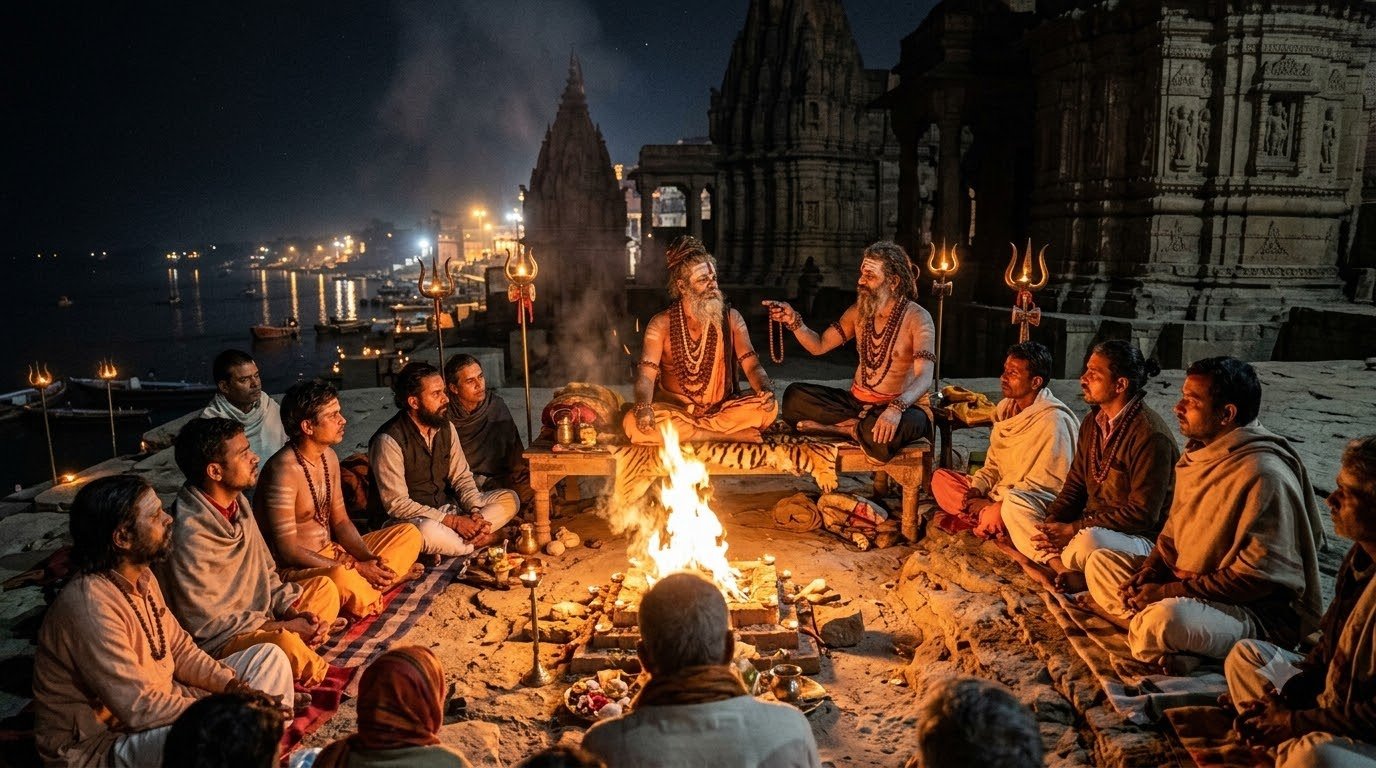
Aghor Sadhana Ka Asli Arth In the vast spiritual landscape of India, few paths evoke as much curiosity, mystery, and misunderstanding as Aghor Sadhana. Popular culture, media portrayals, and half-understood stories often paint Aghoris as fearsome figures living in cremation grounds, performing extreme rituals, and rejecting social norms. While some of these images contain elements of truth, they miss the deeper essence. The true meaning of Aghor Sadhana is far more profound, peaceful in its ultimate aim, and rooted in a radical understanding of non-duality.
This article explores Aghor Sadhana Ka Asli Arth — the real meaning of Aghor practice — in clear, simple English. It draws from traditional Shaiva and Tantric understanding, aiming to give readers an accurate, respectful, and useful perspective. Whether you are a spiritual seeker, someone curious about Indian traditions, or simply looking to understand this path better, this guide will help you see beyond the surface. Aghor Sadhana Ka Asli Arth
What Does the Word “Aghor” Actually Mean?
The Sanskrit word Aghor is formed from “A” (not) and “Ghor” (terrible, dreadful, or dark). Literally, it means “that which is not terrible” or “beyond fear and darkness.” It points to a state of consciousness free from aversion, hatred, disgust, and dualistic judgment. Aghor Sadhana Ka Asli Arth
In everyday life, the human mind constantly divides the world into pairs of opposites: pure and impure, good and bad, beautiful and ugly, life and death, sacred and profane. These divisions create attachment and aversion, which bind us to suffering. Aghor philosophy teaches that these dualities are ultimately illusory. Everything that exists is a manifestation of the same divine consciousness — often understood as Shiva or the Absolute. Aghor Sadhana Ka Asli Arth
An Aghori does not seek to become “scary.” The goal is to become so free from fear and preference that nothing appears dreadful anymore. This is the heart of Aghor Sadhana Ka Asli Arth.
The Philosophical Foundation: Non-Duality in Action
Aghor Sadhana is a living expression of Advaita (non-dualism). It shares roots with the ancient Kapalika tradition and later Shaiva Tantra. Practitioners see Lord Shiva, especially in his fierce forms such as Bhairava or Mahakala, as the ultimate reality that encompasses both creation and destruction, light and darkness. Aghor Sadhana Ka Asli Arth
Key principles include:
- Everything is Shiva: Whether a fragrant flower or a decaying body, a temple or a cremation ground — all are expressions of the same consciousness.
- Transcending the eight bonds: Traditional texts speak of ashta-pasha (eight bonds) that limit the soul — desire, anger, greed, delusion, pride, jealousy, fear, and hatred. Aghor practices aim to loosen these bonds.
- Jivanmukti: Liberation is possible in this very life, not only after death. The practitioner seeks to realize the Self as identical with the Absolute while still living.
This is not theoretical philosophy. Aghor Sadhana uses direct, often intense methods to confront and dissolve mental limitations. The cremation ground (smashan) becomes a powerful classroom because it constantly reminds the practitioner of impermanence and strips away social pretenses.
Common Misconceptions About Aghor Sadhana
Many people associate Aghor only with shocking external practices. While some Aghoris historically used human bones, sacred ash (vibhuti), or lived near cremation grounds, these are tools, not the goal. The true purpose is inner transformation. Aghor Sadhana Ka Asli Arth
Popular myths include:
- Aghoris are only about black magic or harming others.
Reality: Authentic Aghor tradition emphasizes self-realization and often includes protection and healing work when guided properly. - The path is purely tamasic or dark.
Reality: The intensity is used to go beyond tamas (inertia and darkness) into a state of pure awareness. - Anyone can casually try extreme practices.
Reality: Without proper guidance from a qualified Guru, such practices can be harmful. Discipline, purity of intention, and readiness are essential.
Understanding these points helps clear the fog around Aghor Sadhana Ka Asli Arth.
Core Elements of Aghor Sadhana
Aghor practice is highly individual and traditionally transmitted from Guru to disciple. Still, certain themes appear consistently:
1. Fearlessness (Abhaya)
The practitioner deliberately faces what ordinary people avoid — death, impurity, rejection — to discover that fear itself is a mental construct. When fear dissolves, a natural fearlessness arises.
2. Equanimity Toward All Experiences
Pleasure and pain, praise and blame, pure and impure — all are treated with the same evenness of mind. This is practiced through meditation, ritual, and daily conduct. Aghor Sadhana Ka Asli Arth
3. Guru-Disciple Relationship
No genuine Aghor path exists without the guidance of a living Guru. The Guru is seen as the embodiment of Shiva who transmits both knowledge and the necessary energy for transformation.
4. Seva and Compassion
Contrary to the stereotype of isolation, many authentic Aghor lineages emphasize selfless service. When the heart opens beyond dualities, natural compassion for all beings flows.
5. Worship of Fierce Forms
Daily or special worship of Kaal Bhairav, Mahakala, or fierce forms of the Divine Mother helps the practitioner internalize the energy of transformation and protection.
These elements show that Aghor is not about rejecting society for its own sake, but about using unconventional means to reach a conventional spiritual goal: freedom from suffering.
Why the Path Appears Extreme
Ordinary spiritual practices work gradually within the comfort zone of the mind. Aghor takes a more direct route. By confronting the very things the ego rejects, the practitioner accelerates the process of ego dissolution. This is why the path is considered vira (heroic) sadhana. It is not suitable for everyone, and it demands exceptional mental strength, ethical grounding, and continuous guidance.
The external symbols — ash-smeared bodies, skull cups (kapala), or residence near smashan — serve as constant reminders that the body is temporary and that consciousness alone is real. They are never meant as public performance or shock value.
Aghor Sadhana in the Modern World
Today, genuine Aghor practitioners are rare. Many people claiming the title may be incomplete or motivated by other interests. Authentic teachers focus on clearing misconceptions and guiding sincere seekers toward inner freedom rather than external display.
In contemporary life, the essence of Aghor can still inspire us:
- Seeing the divine in difficult people and situations.
- Reducing aversion and judgment in daily interactions.
- Cultivating fearlessness in the face of uncertainty.
- Recognizing that purity is ultimately a state of mind, not merely external cleanliness.
For those drawn to deeper protective or transformative practices connected with Aghor and Tantric traditions, proper guidance remains essential. Aghor Sadhana Ka Asli Arth
The Ultimate Goal of Aghor Sadhana
The final aim is not power, siddhis (spiritual attainments), or social recognition. It is the complete realization that the individual Self (Atman) is one with the Absolute (Brahman or Shiva). In that state, dualities collapse. The practitioner becomes Aghoreshwar — the Lord of the non-terrible state — free from the cycle of birth and death while still living.
This is Aghor Sadhana Ka Asli Arth: a path that looks extreme from the outside but aims at the simplest and most natural state of being — one free from fear, hatred, and separation.
Guidance for Sincere Seekers The True Meaning Beyond Fear and Misconceptions
If the philosophy of Aghor resonates with you, approach it with humility and respect. Study under authentic teachers, prioritize ethical living, and remember that true progress is measured by the quieting of inner conflict rather than dramatic outer signs.
For those seeking traditional guidance rooted in Aghor and related Tantric understanding, including protection practices and deeper sadhana insights, you may connect with experienced practitioners who uphold the spirit of the tradition. Aghor Sadhana Ka Asli Arth
Yogi Rudra Maharaj
Website: https://yogirudramaharaj.info/
Call / WhatsApp: +91-7357935089
Email: info@yogirudramaharaj@gmail.com
Whether you simply wish to understand this ancient path better or feel called to explore its transformative potential under proper guidance, the true meaning of Aghor always points back to one truth: everything is sacred, nothing is to be feared, and the divine is never separate from you. Aghor Sadhana Ka Asli Arth
This image captures the true spirit of Aghor — fearless presence, inner stillness, and the sacredness of what society often rejects.