
Pishach Kya Hota Hai Have you ever heard the word “Pishach” and wondered what it really means? In everyday conversation, people sometimes use it to describe something scary or negative. But in Hindu scriptures and traditional knowledge, Pishach has a specific meaning. This article explains Pishach kya hota hai in simple, clear English so you can understand the idea without confusion or fear.
We will look at what the ancient texts say, how Pishach is different from other subtle beings, the signs people traditionally associate with its influence, and the protective approach found in authentic Aghori Tantra. Everything is presented in a practical, respectful way based on long-standing Indian spiritual understanding. Pishach Kya Hota Hai
What Does the Word Pishach Mean?
The Sanskrit word Piśāca (पिशाच) is linked to the idea of flesh or raw consumption. In simple terms, Pishach refers to a class of malevolent subtle beings described in Hindu and Buddhist traditions. They are often called flesh-eating spirits or night-haunting entities. Pishach Kya Hota Hai
Unlike ordinary restless souls, traditional descriptions present Pishachas as denser and more aggressive. They are associated with darkness, impurity, fear, and places connected to death, especially cremation grounds (shamshan).
You will find mentions of them in the Atharva Veda, the Mahabharata, and various Puranas. These texts describe them as tamasic forces that thrive on chaos, sorrow, and vital energy. Pishach Kya Hota Hai
Origin of Pishach According to Hindu Scriptures
Different scriptures give slightly different accounts of how Pishachas came into being, yet they share a common theme.
The Mahabharata states that the original Pishachas were created by Brahma. Other traditions connect them to Krodha (the personification of anger) or to a daughter of Daksha named Pishacha. In some stories, they appear as beings who inhabit the courts of Kubera or Brahma and even worship Shiva and Parvati in certain contexts.
Across these accounts, one idea remains clear: Pishach represents a deeply tamasic force. It is not a neutral spirit. It is linked with impurity, decay, and the disturbance of human life. Pishach Kya Hota Hai
Some later folklore also suggests that a person who dies in a violent or impure way, or whose last rites are not performed properly, may take on a Pishach-like form for a period. This is one reason why proper funeral rituals and ancestral offerings hold importance in Hindu tradition. Pishach Kya Hota Hai
Key Characteristics of a Pishach A Clear Guide to This Ancient Concept in Hindu Tradition
Traditional descriptions highlight several consistent traits:
- Strong attraction to darkness and impure places, especially cremation grounds
- Ability to create illusions and influence the mind
- Power to become invisible or change form
- Tendency to feed on fear, negative emotions, and vital energy
- Association with sudden mental disturbance, restlessness, or unexplained heaviness
Pishachas are often depicted with grotesque features in classical literature — bulging veins, protruding red eyes, and a generally fearsome appearance. They are said to haunt lonely or desolate places and can affect people who are already emotionally or spiritually vulnerable. Pishach Kya Hota Hai
It is important to remember that these are traditional descriptions. Modern understanding treats them as part of a broader framework of subtle energies rather than physical creatures that walk around in the ordinary world.
How Pishach Differs from Bhoot, Pret, and Other Spirits
People often use the words Bhoot, Pret, and Pishach interchangeably. Traditional knowledge, however, draws clear distinctions.
- Bhoot usually refers to a restless soul of a departed person who has not moved on.
- Pret is often linked to ancestral spirits or those stuck due to unfulfilled desires or incomplete rites.
- Pishach is considered more aggressive and denser. It is associated with stronger tamasic qualities and a greater capacity to disturb the mind and energy of the living.
In short, while Bhoot and Pret may be restless, Pishach is traditionally viewed as more malevolent and energy-consuming. This difference is why protection methods for Pishach influence are often more intensive and rooted in deeper tantric knowledge.
Signs Traditionally Linked to Pishach Influence
Authentic spiritual teachers always advise careful observation rather than panic. Some signs that traditional knowledge associates with dense negative influence include:
- Sudden and persistent fear or a feeling that someone is watching
- Unexplained mental restlessness, insomnia, or disturbing dreams
- A sense of heaviness or stagnant energy in a particular room or house
- Repeated obstacles that seem to have no logical cause
- Sudden changes in behaviour or unexplained physical discomfort that medical tests cannot fully explain
These signs can also have ordinary psychological or medical causes. That is why genuine guides always recommend first checking practical explanations before looking at subtle-energy factors.
The Role of Aghori Tantra in Understanding and Protection
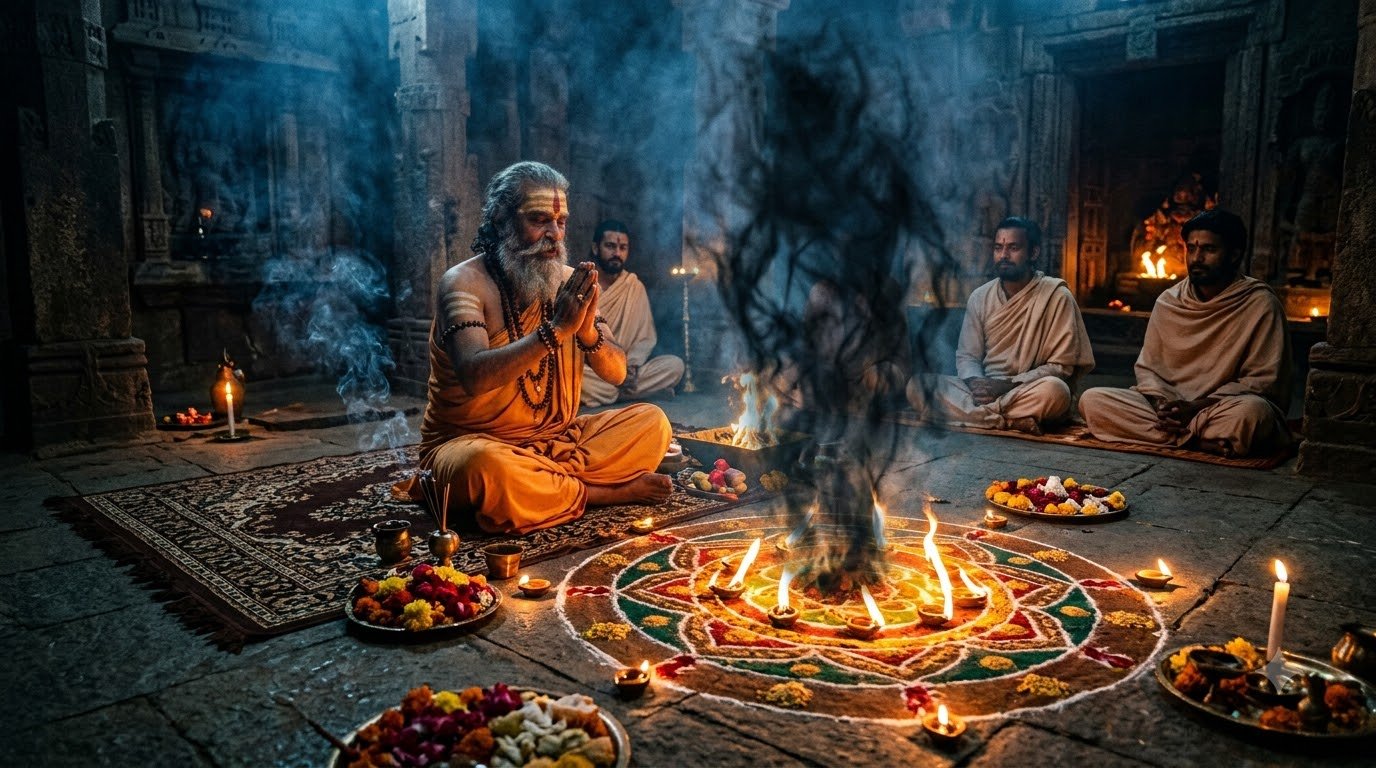
Aghori tradition has a unique relationship with the shamshan and with the subtle forces that inhabit liminal spaces. True Aghor practice is rooted in fearlessness, deep acceptance of all aspects of existence, and the transformation of negative energies rather than their denial. Pishach Kya Hota Hai
Aghori sadhakas who walk the authentic path study the nature of dense energies, including those traditionally called Pishach. Their methods focus on protection, purification, and helping both the living and restless forces find balance. This work requires purity of intention, strong sadhana, and the guidance of a living Guru.
In the living tradition associated with Mashani (cremation-ground) knowledge, the emphasis is never on fear. It is on clarity, strength, and restoring natural balance. Protection work in this lineage aims to clear obstacles so that a person can move forward with greater peace and stability. Pishach Kya Hota Hai
Practical Ways Traditional Knowledge Suggests for Protection
While deep tantric work should only be done under proper guidance, everyday protective practices that many people follow include:
- Maintaining cleanliness and positive atmosphere at home
- Regular chanting of protective mantras such as the Maha Mrityunjaya Mantra or Hanuman Chalisa
- Offering prayers to fierce yet protective forms of the Divine such as Bhairava, Kali, or Hanuman
- Avoiding places and situations that feel energetically heavy when one is already feeling low
- Seeking guidance from an experienced and ethical spiritual practitioner when difficulties persist
The key principle is purity of intention. Practices done with fear or harmful motives tend to create more imbalance. Practices done with sincerity and respect support clarity and protection.
Why Understanding “Pishach Kya Hota Hai” Matters Today
In modern life many people experience unexplained heaviness, repeated obstacles, or a sense of being energetically drained. Traditional frameworks give language and methods to understand and address these experiences without falling into superstition or panic.
Knowing what the concept of Pishach means helps a person:
- Distinguish between ordinary problems and deeper energetic patterns
- Approach spiritual protection with clarity rather than fear
- Seek authentic guidance when needed
- Maintain balance between practical action and spiritual support
Genuine spiritual support is meant to clear the path, not replace responsible everyday action. It works best when combined with honest self-reflection, medical care when needed, and ethical living.
Final Thoughts
Pishach kya hota hai is a question that has been asked for centuries. The answer given by Hindu scriptures and living tantric traditions is clear: Pishach refers to a class of dense, tamasic subtle beings associated with impurity, fear, and energy disturbance. They are distinct from ordinary restless souls and are traditionally linked with places of death and darkness.
Understanding this concept does not mean living in fear. It means recognising that subtle energies exist and that authentic spiritual traditions offer ways to protect, purify, and transform them. The Aghori path, when followed with purity and proper guidance, approaches these forces with fearlessness and the aim of restoring balance.
If you are facing persistent unexplained difficulties and feel the need for traditional spiritual support rooted in Aghori and Mashani knowledge, you can reach out for guidance. Pishach Kya Hota Hai
Website: https://yogirudramaharaj.info/
Name: Yogi Rudra Maharaj
Call / WhatsApp: +91-7357935089
Email: info yogirudramaharaj@gmail.com
Authentic guidance begins with sincerity and clarity. When these qualities are present, the path toward greater understanding and balance becomes easier to walk. Pishach Kya Hota Hai